
Blog / People and work
Training AI agent developers: what it really takes
How to train developers who can build AI agents that are useful in a company. Practical examples and advice for SMEs in Northern Italy.
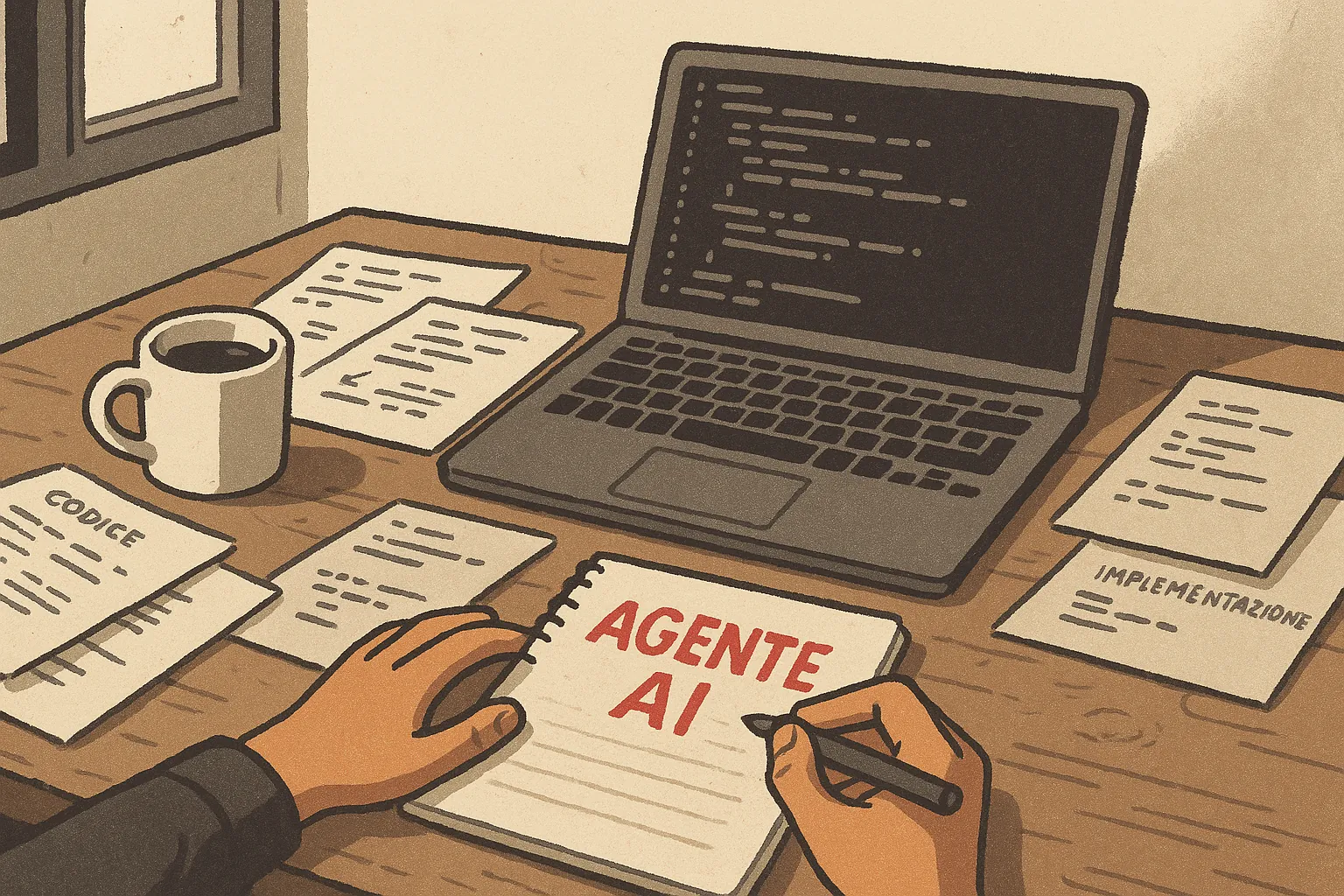
Training AI agent developers takes concrete processes, real examples and tools that measure results and costs. Theory is not enough: every agent has to be tested in the field, with human oversight and verifiable data.
Many SMEs invest in AI courses, but few developers manage to build agents that really work inside business processes. Technology does not make the difference: hours saved and measured results do.
From the intensive course to the workbench
The success of courses such as the one run by Google and Kaggle shows that demand for training on AI agents is very high. But after the theory, the reality of SMEs is made of repetitive processes, scattered data and systems that are not always integrated. One example: in a consulting firm, even after the course, the first AI agent struggles to handle client requests if it is not clear who does what and which data can be worked on. What is needed is training that starts from the company's real cases, not just abstract exercises.
Programming in natural language: it takes method
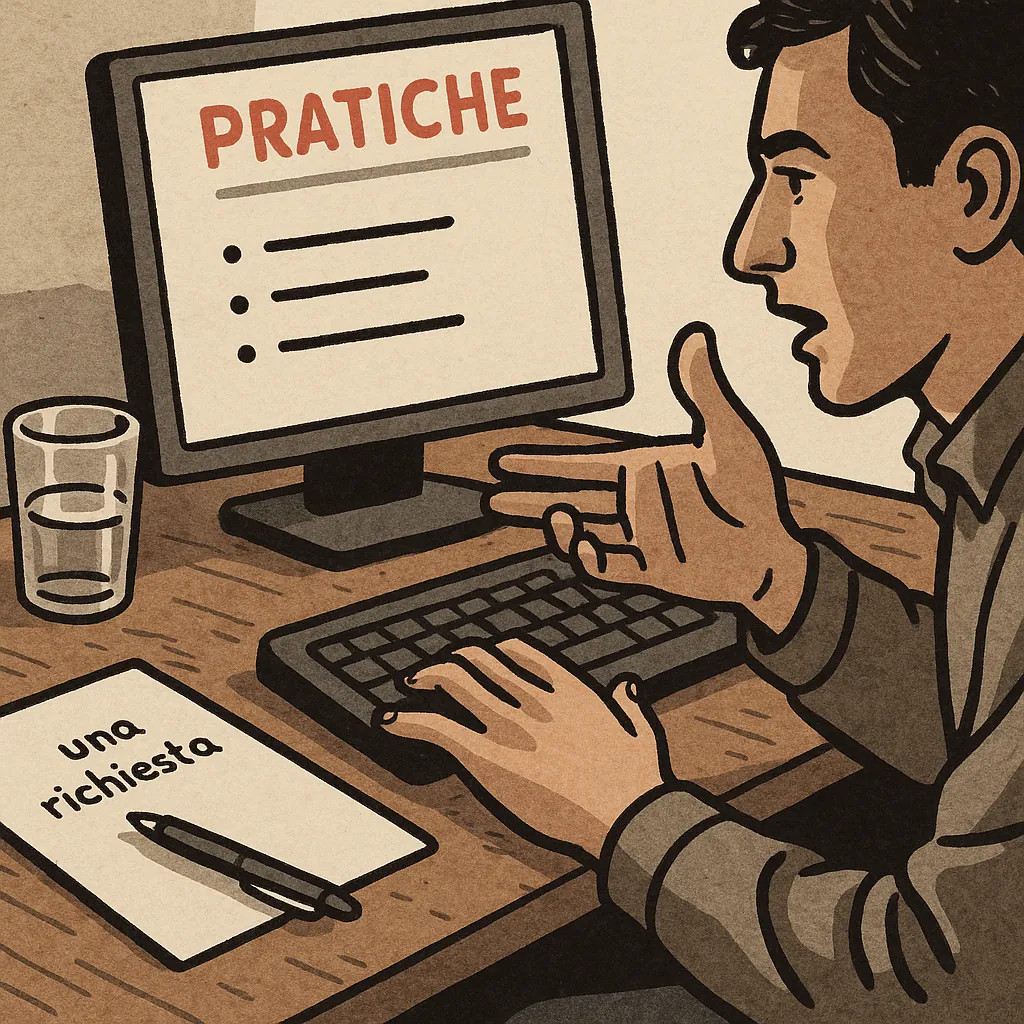
Today many tools let you instruct AI agents in natural language. But without a clear method, you risk producing agents that answer unpredictably or cannot tell you how much time and resources they consume. In a services SME, for example, writing a request in plain language may be enough to launch an agent. But if the outcome is not measured (how many files were actually processed?), the risk is never knowing whether extending the automation is worth it.
The role of human oversight
AI agents with human oversight are the only way to avoid gross errors and ensure that every activity can be verified. A concrete example: in a logistics company, an AI agent can propose automatic replies to quote requests, but a person checks and approves the sending. Time is saved without losing control. Training has to include managing oversight and reading execution data, not just writing prompts.
What standard courses do not teach
Many courses stop at building the agent and do not explain how to measure what happens next. In practice, an agent running in a company has to log inputs, outputs, times and costs. If an agent fails, you need to see where it broke. Only then can you decide whether to automate other processes. One example: an SME in Northern Italy that automated payment reminders discovered that the real saving lay in seeing at once where the process got stuck, not just in sending the emails automatically.
What it is: AI agents with human oversight
They are systems that automate repetitive tasks, where every run is verified by a person. This guarantees control over the results and the chance to correct errors before they become expensive.
Frequently asked questions
Do you need to be an expert programmer to train AI agents?
No, but you need method and the ability to measure results. Modern tools lower the technical barrier, but human oversight makes the difference.
How do you measure whether an AI agent pays off?
By logging the inputs, outputs, times and costs of every run. That is the only way to see where you really save and where you do not.
Can an AI agent completely replace a person?
No: in SMEs, human oversight remains essential to avoid errors and maintain service quality.
How long does it take to see results from an AI agent in a company?
You start from a single process: if it works, the saving shows within a few weeks. If it does not, you correct it or change process.
Drafts are produced by the Brainvision OS editorial pipeline and reviewed by a person before publication.
Keep reading
All articles
27 August 2026
Cognitive flexibility and trust in AI
How AI agents with human oversight improve cognitive flexibility and trust in business decisions. Examples for professional firms.

22 August 2026
AI agents and human capital: how work is changing in insurance
How AI agents with human oversight are reshaping insurance processes, making the most of people's skills and cutting repetitive work.
11 August 2026
Intelligent agents and work: what really changes in a company
AI agents with human oversight are transforming processes in insurance and finance: more efficiency, fewer errors, more value for people's skills.