Blog / People and work
Cognitive flexibility and trust in AI
How AI agents with human oversight improve cognitive flexibility and trust in business decisions. Examples for professional firms.
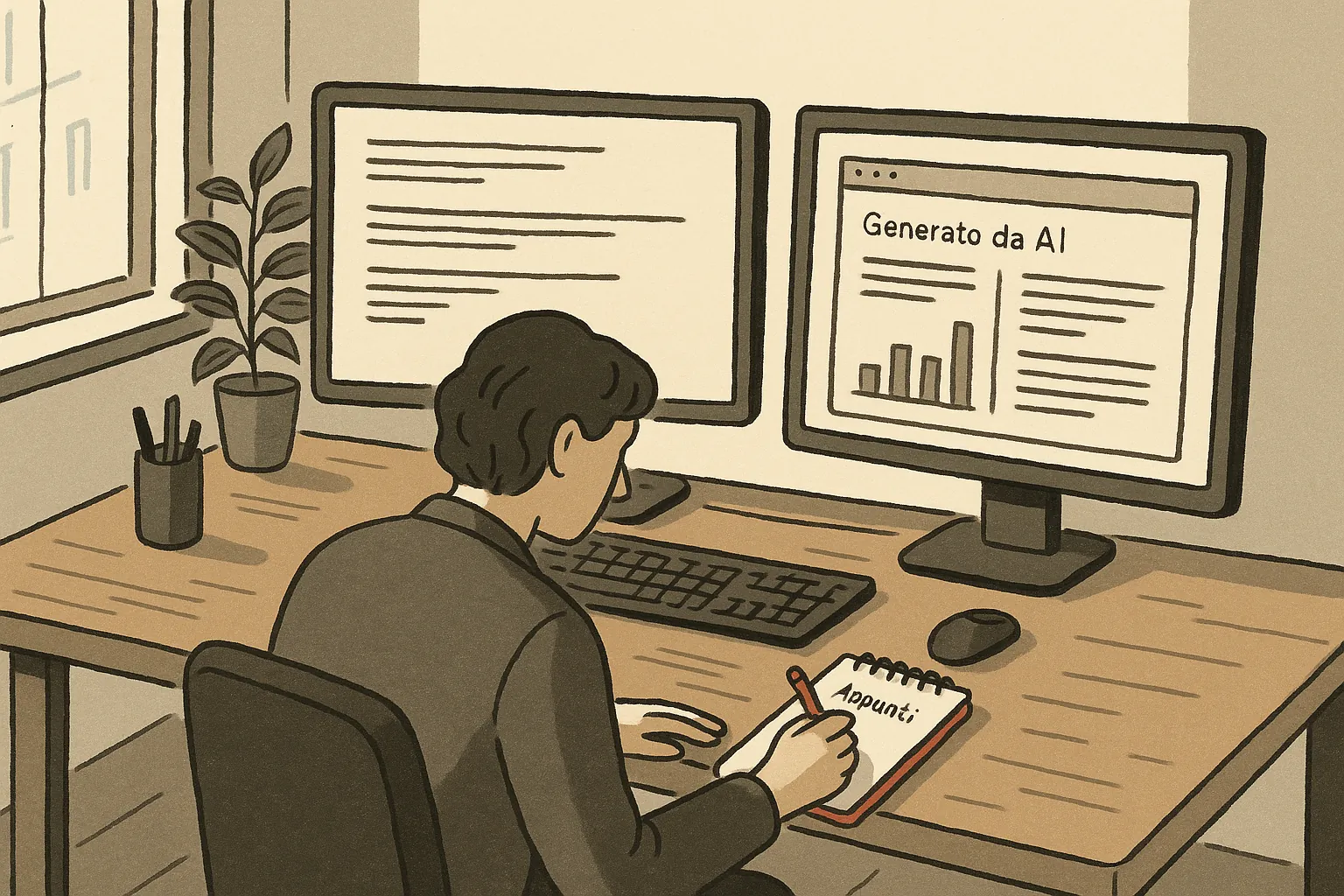
AI agents with human oversight help SMEs keep control over decisions, offering transparent explanations and verification tools that support cognitive flexibility without replacing human reasoning.
People often fear that AI takes control of important decisions away from them. In reality, the true risk is losing the ability to reason with clear data and concrete explanations.
When automation risks becoming a problem
In a professional firm, automating everything without understanding the steps leads to errors nobody can explain. One example: the automatic generation of tax reports. If the system does not show how it reaches its results, the owner ends up having to justify numbers that cannot be verified. This does not just undermine trust, it puts legal liability at risk. The answer is not to give up on AI, but to demand transparency and control tools.
AI agents with human oversight: how they really work
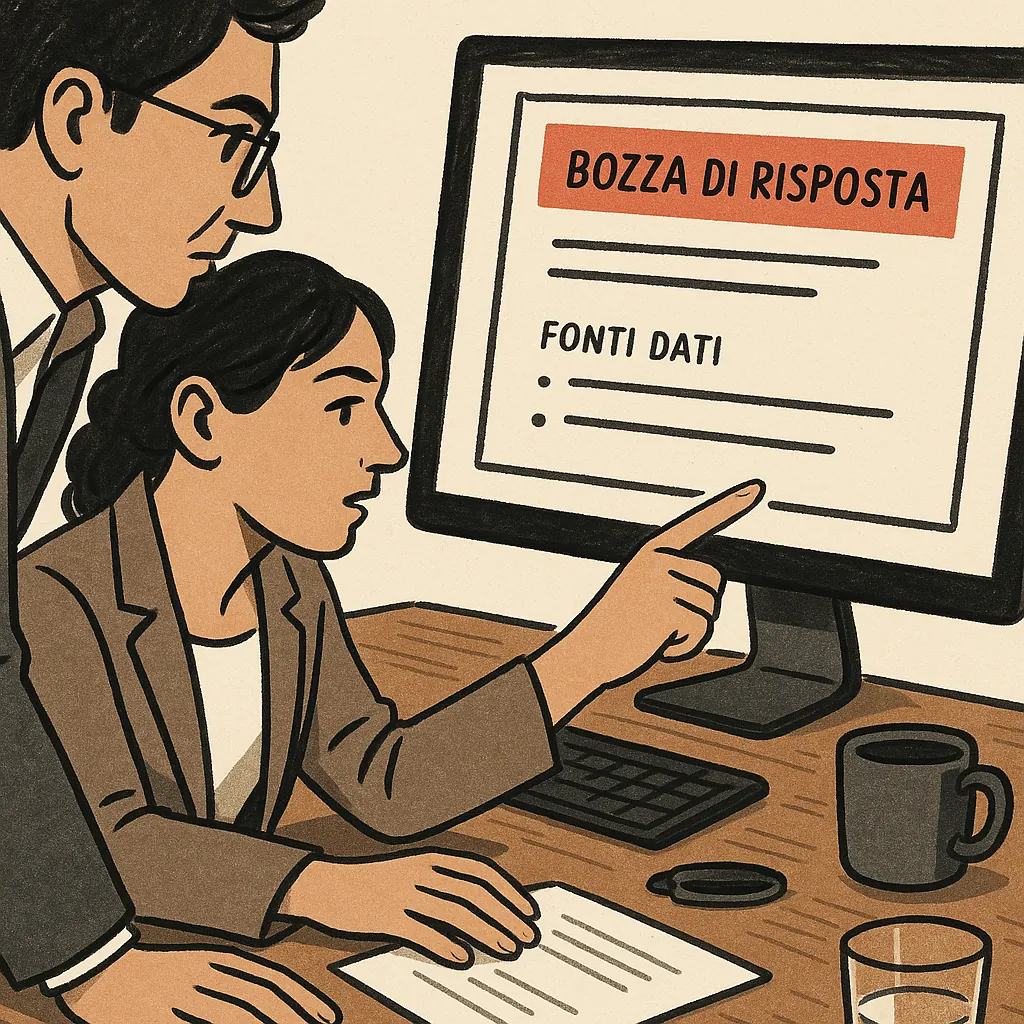
AI agents with human oversight do not take decisions in your place. They automate the repetitive steps, such as checking data or filling in forms, but every result is explained and can be verified before it is approved. For example, when an AI agent prepares a draft reply to a client, it also shows which data it used and why. The professional can then correct, add to or block the reply, keeping full control.
Structuring the reasoning, not replacing it
A well-designed AI agent helps to structure reasoning: it proposes alternatives, flags inconsistencies and highlights missing data. It does not decide, it supports the person who decides. In a professional firm, this means being able to delegate the collection and preliminary analysis of data while keeping the final assessment for the owner. The result is a decision-making process that is faster and less prone to error, without giving up responsibility.
When to trust AI: the role of transparency
Trust in AI comes from being able to see and verify every step. An agent that shows how it reached a result lets you understand whether to trust it or step in. If a piece of data is missing, the system flags it. If a rule has been applied, it explains how. Human oversight is then not a formality, but a real guarantee that the process stays under control.
What it is: cognitive flexibility
Cognitive flexibility is the ability to adapt your reasoning and your decisions in the light of new information and explanations, keeping control even when using automation tools such as AI.
Frequently asked questions
Can AI agents replace human judgement?
No. AI agents with human oversight support reasoning, but the final decision always stays with the person responsible.
How do you check the work of an AI agent?
Every result comes with explanations and the data used, so whoever supervises can check and approve before going ahead.
What happens if the AI does not find all the data it needs?
The agent flags the missing data and does not invent results. The decision on how to proceed always rests with the user.
Why does transparency matter in AI systems?
Transparency makes it possible to understand how decisions were reached, which increases trust and reduces the risk of errors.
Drafts are produced by the Brainvision OS editorial pipeline and reviewed by a person before publication.
Keep reading
All articles
22 August 2026
AI agents and human capital: how work is changing in insurance
How AI agents with human oversight are reshaping insurance processes, making the most of people's skills and cutting repetitive work.
17 August 2026
Training AI agent developers: what it really takes
How to train developers who can build AI agents that are useful in a company. Practical examples and advice for SMEs in Northern Italy.
11 August 2026
Intelligent agents and work: what really changes in a company
AI agents with human oversight are transforming processes in insurance and finance: more efficiency, fewer errors, more value for people's skills.