
Blog / Process and method
Business chatbots: how to really integrate them into your processes
How to integrate business chatbots into real processes: customisation, connectors, skills and the limits you should know. A practical guide for SMEs and service firms.
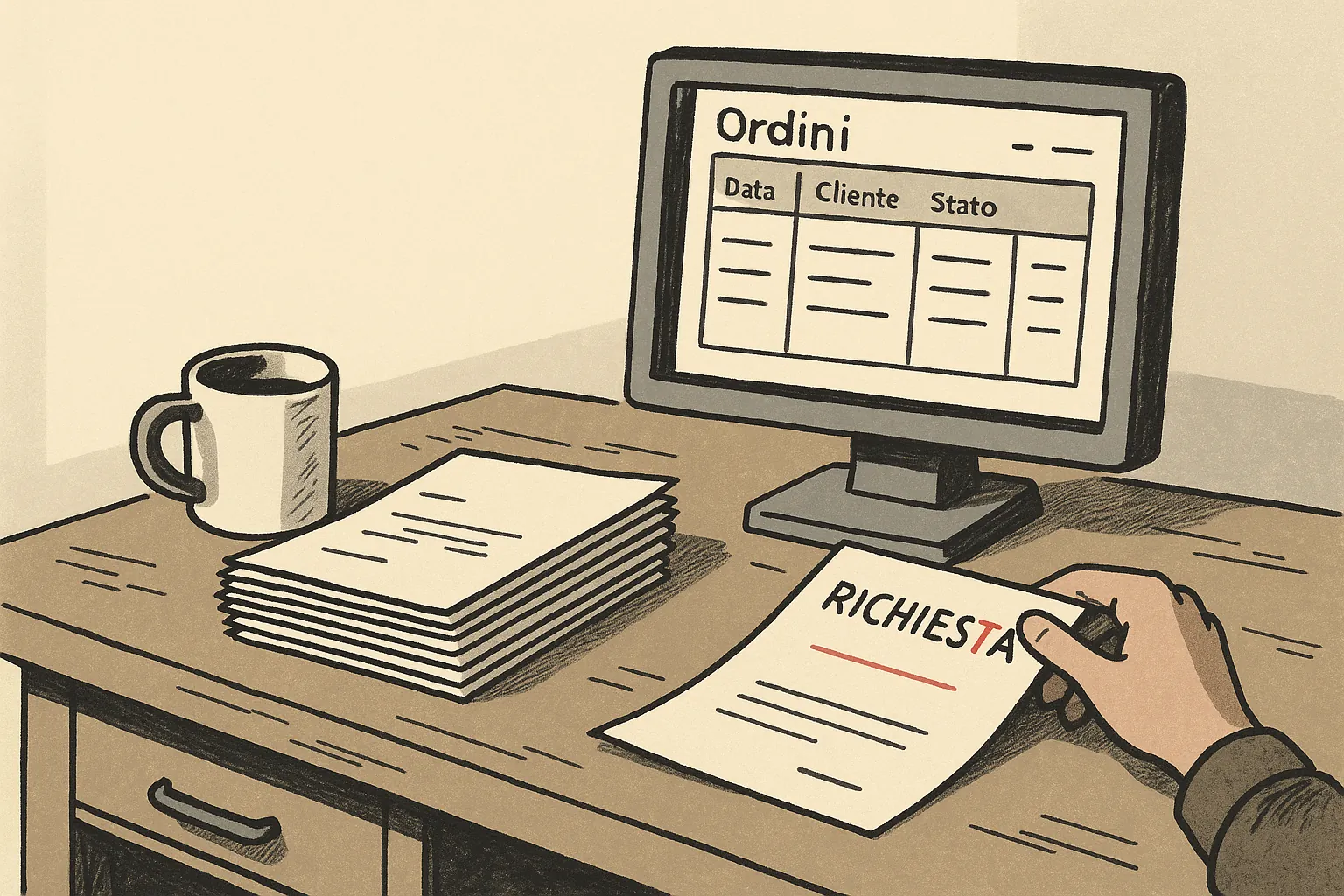
A business chatbot only works if it is integrated into internal systems through connectors and skills, adapting its answers to real processes. An AI agent with human oversight adapts to the context: plugging in a generic model is not enough.
A chatbot that cannot reach internal data only gives half an answer. Every minute spent copying data from one system to another is lost time that repeats every day.
Why generic chatbots are not enough
A standard chatbot answers simple questions, but it stops when data has to be read from or written to company systems. In an SME in the Verbano-Cusio-Ossola area (VCO), for example, a generic chatbot cannot update an order status in the management system or retrieve a past quote. The result: everything goes back to being done by hand, and the promise of efficiency vanishes.

What connectors and skills are: the case of Claude
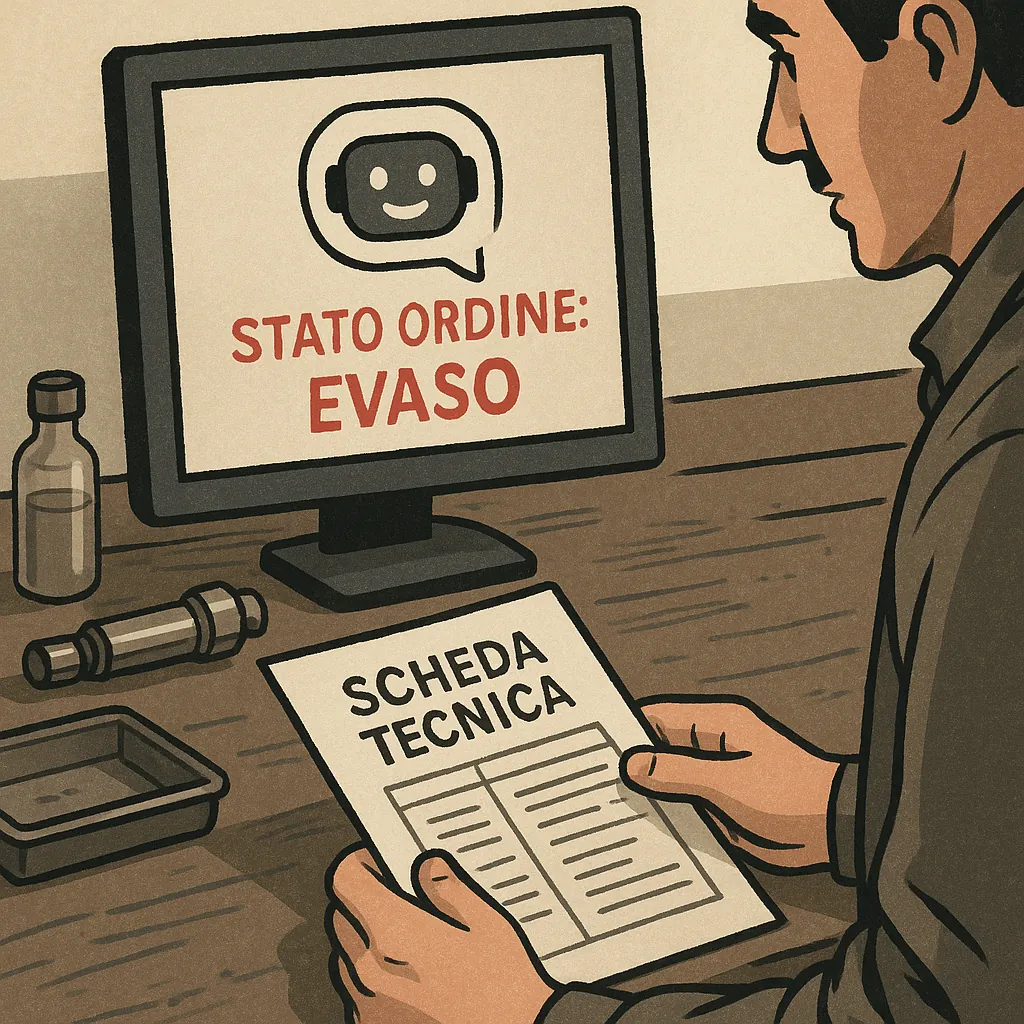
Connectors allow an AI agent such as Claude to read (and often write) data inside external systems: management software, CRMs, document archives. Skills are custom instructions that guide the chatbot to answer according to the company's rules. An example: in the Cusio tap-manufacturing district, an AI agent can fill in a technical sheet by reading data from the management system and applying internal rules, without ever making anything up.
Customisation: the only way a chatbot becomes useful
An AI agent with human oversight has to be designed around real rules and processes. It does not just answer: it carries out actions, logs every step, shows real data and points out where information is missing. In an order office, that means seeing at once whether a request has been fulfilled and how long it took, with no errors or invented data.
What you should never delegate to a chatbot
A chatbot must not take decisions that carry legal responsibility, nor act where human judgement is needed. Automating the reply to recurring requests or data entry is fine, but approving a contract or handling a critical complaint stays in people's hands. If the result is not measured, nothing is being automated.
What they are: connectors and skills
Connectors are links that allow an AI agent to interact with company systems. Skills are custom instructions that guide the agent in its answers and actions, according to the company's rules.
Frequently asked questions
Can a generic chatbot handle my internal processes?
No. Without custom connectors and skills, a chatbot cannot reach your data and does not follow your rules.
What does it take to integrate a chatbot into my systems?
You need to develop specific connectors for your management systems and define skills that reflect your processes.
Can I automate everything with an AI agent?
No. Only repetitive, measurable processes should be automated. Critical decisions stay with people.
How long does it take to see a result?
You usually start from a single process, measured before and after. If it works, you extend it to the rest.
Drafts are produced by the Brainvision OS editorial pipeline and reviewed by a person before publication.
Keep reading
All articles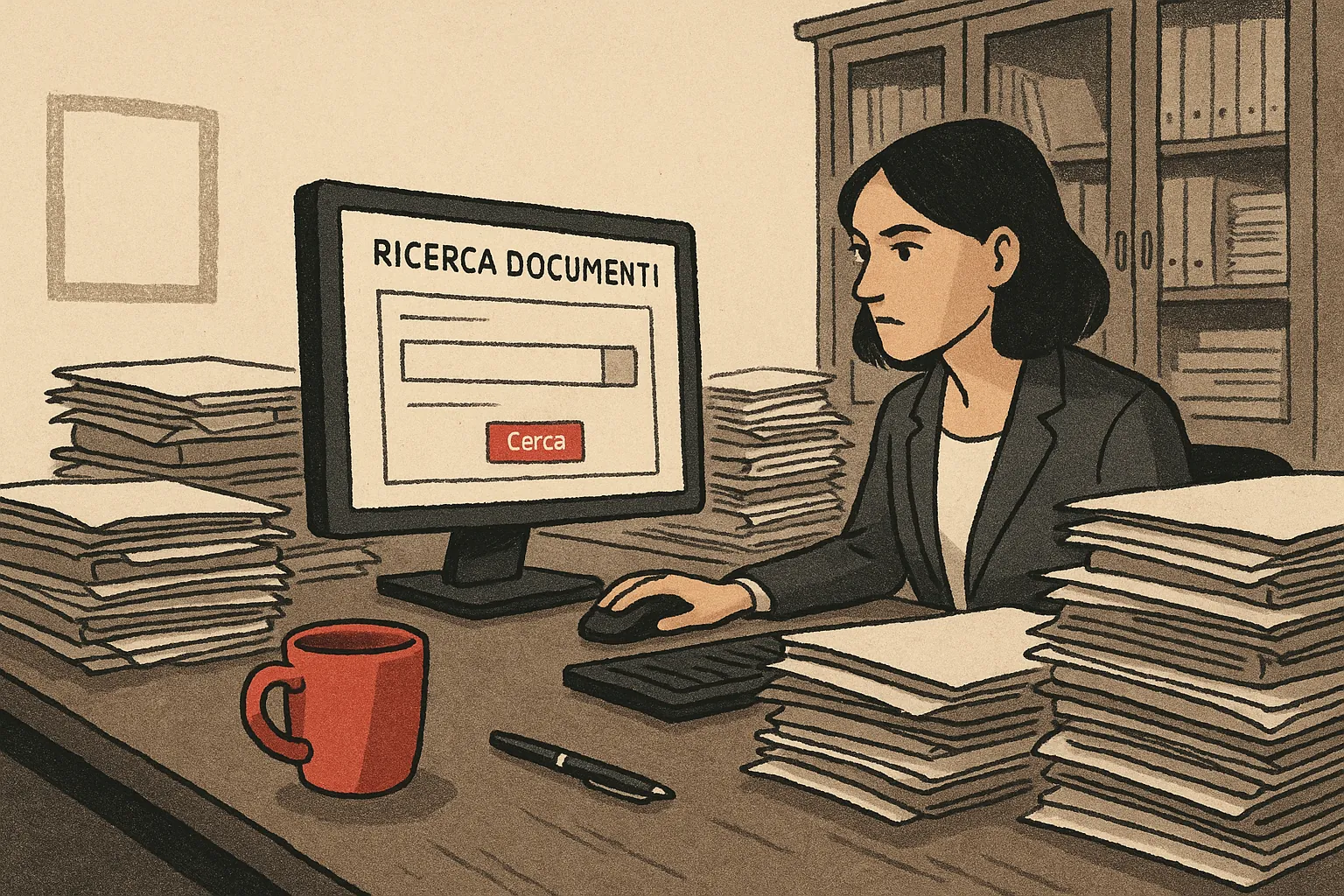
17 August 2026
Metadata and taxonomies: how to organise company content
How metadata and taxonomies make company content navigable and useful, with practical examples for service and industrial SMEs.
12 August 2026
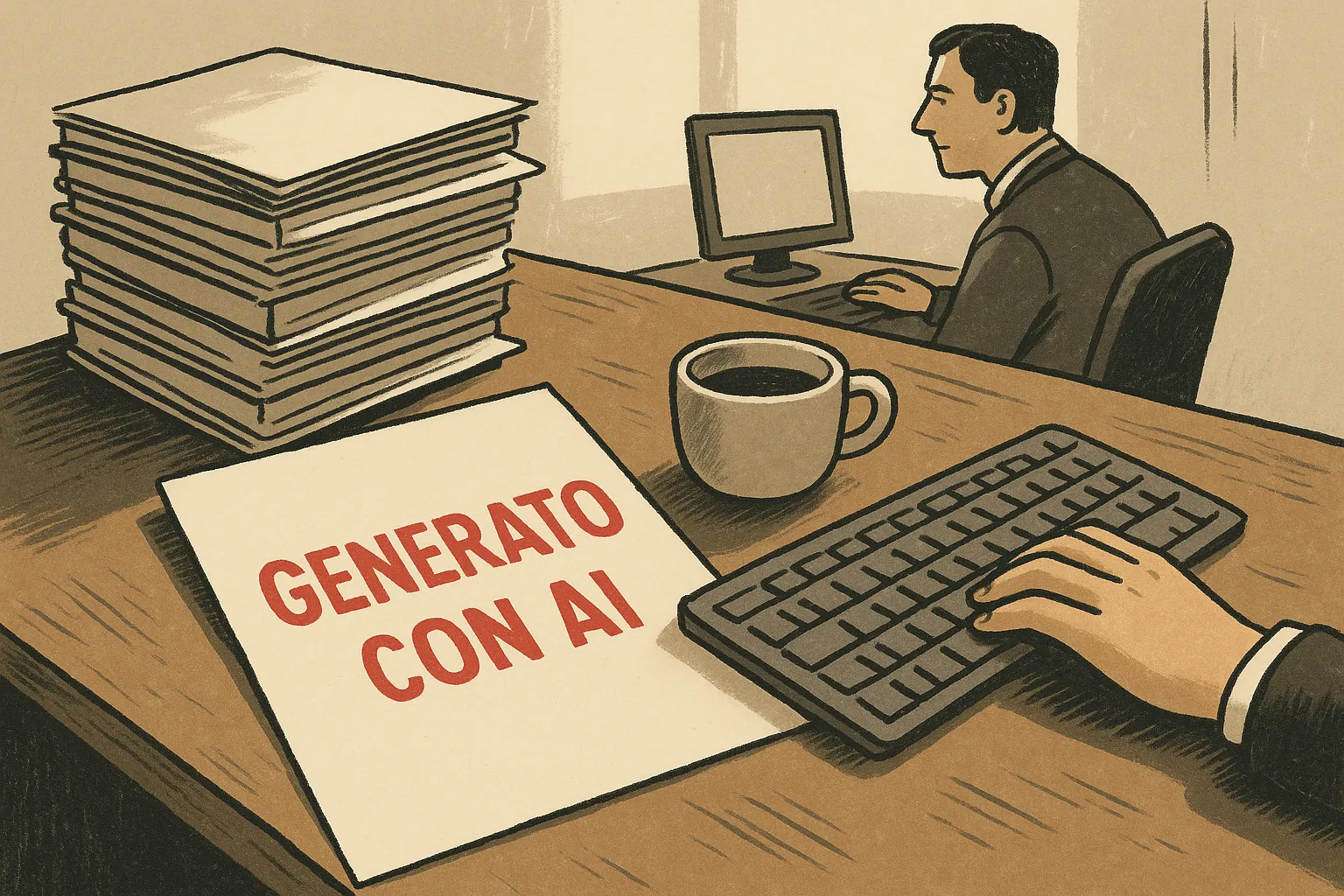
AI in business: how to design tools people actually use
Find out how to bring AI into your company's real processes and avoid tools nobody uses. A practical guide for SMEs and professional firms.
7 August 2026
Redesigning processes to bring AI agents into the company
To get a return from agentic AI, processes have to be rethought: here is how to integrate AI agents with human oversight in SMEs.