
Blog / Technology
AI data orchestration: real efficiency in data centres
How AI agents with human oversight optimise flows and costs in data centres. Concrete examples, risks and what to measure.
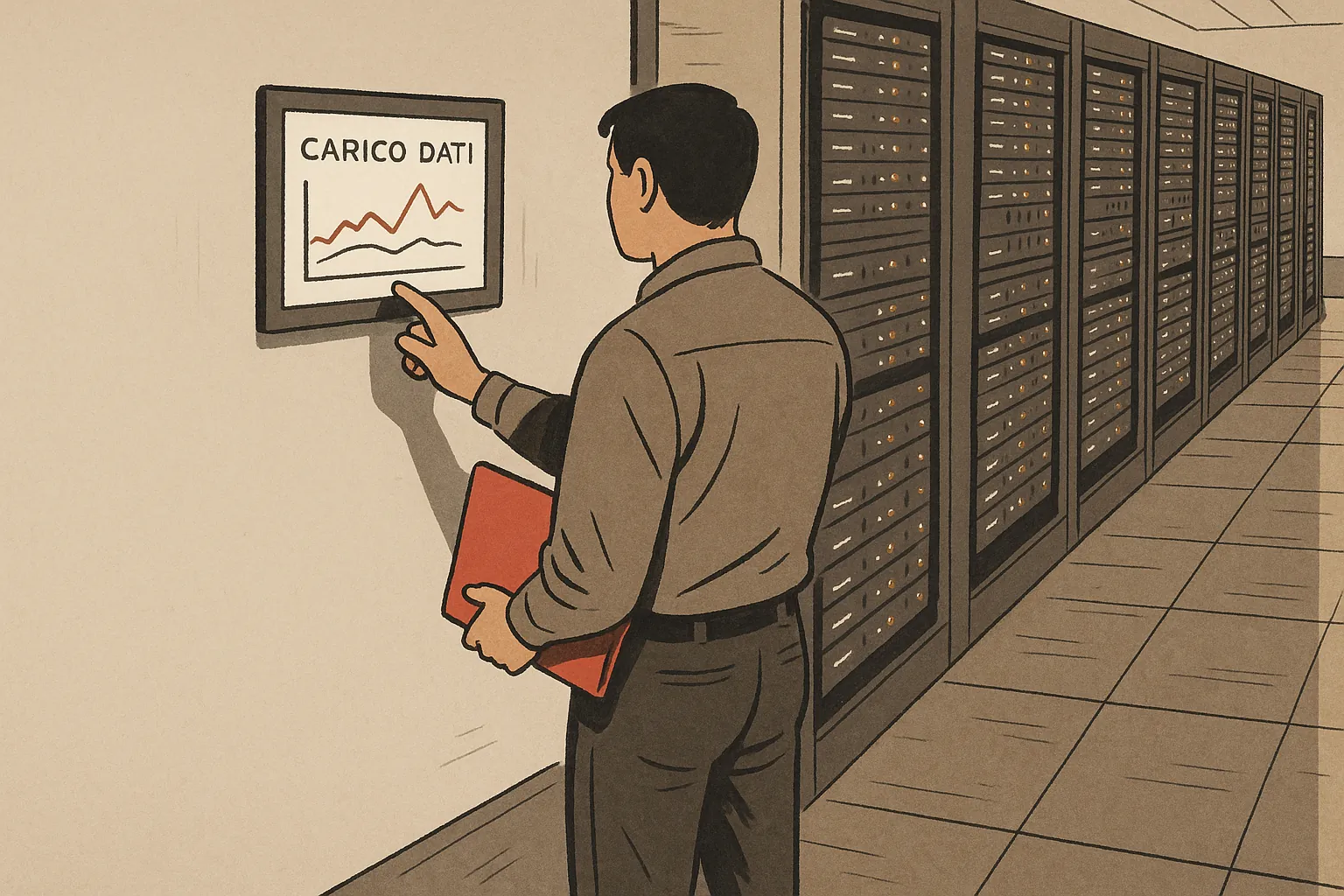
AI agents with human oversight orchestrate data flows in data centres, reducing bottlenecks and improving energy efficiency. Only what is measured and tracked can really be optimised.
A data centre that slows down because of manual processes or unmonitored data flows burns time and electricity. Automation is needed, but without control the chaos grows: every step has to be measured, not just technology installed.
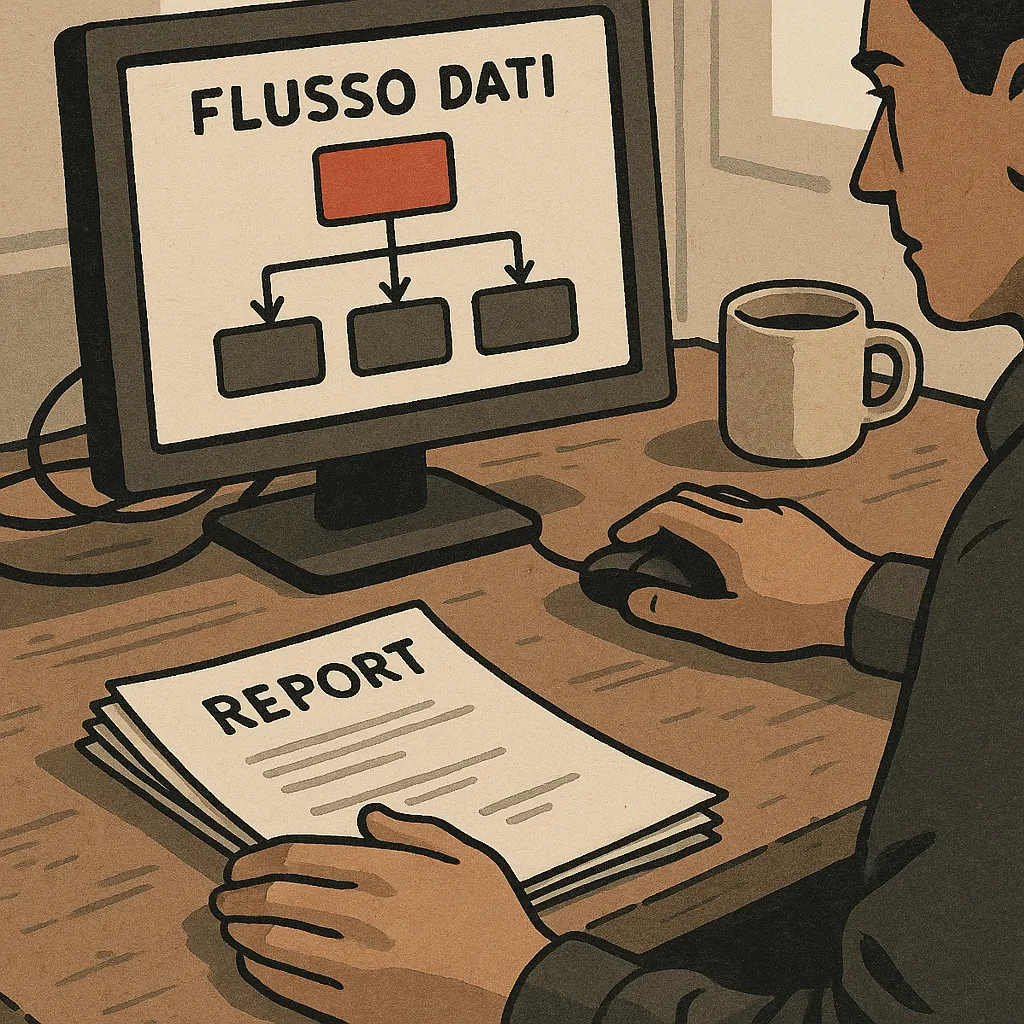
Where hours and kilowatts are lost in data centres
Every day, in data centres across Northern Italy, hours are wasted on repetitive tasks: reallocating resources, managing backups, validating access. Often nobody can say what a single process really costs: action is taken when something breaks, not ahead of time. One example: the manual reallocation of workloads between servers, done by experienced technicians, takes precious minutes every time. If the data flow is not orchestrated and measured, slowdowns and energy waste build up that never show in the accounts.
AI agents with human oversight: what they really do
An AI agent with human oversight does not take blind decisions: it measures, tracks every run, flags anomalies and keeps a record of every step. In a data centre, that means knowing exactly when and why a process stopped, how long it took to restart and how much energy was used. For example, an agent that manages load balancing between servers keeps track of the inputs, outputs and costs of every operation. If something breaks, you see where and when, without losing data or time.
Real data, not estimates: the rule that is not up for negotiation
A number on screen must always come from real data. In data centres, people too often work from estimates: an upgrade is assumed to have improved times, but nobody measured before and after. From Zero AI's agents with human oversight log every activity: if a figure is missing, zero is shown and the reason is explained. This approach avoids wrong decisions and makes it possible to extend only what really works. An example: after automating the nightly backup, you see at once whether the process cut the times or just moved the problem elsewhere.
When automation is not needed (and it should be said)
Not every process should be automated. If a procedure happens three times a month, automation does not pay for itself. An AI agent with human oversight belongs where there is volume, repetition and a risk of human error. In data centres, that means focusing on load balancing, access management and backup monitoring. Automating marginal processes only creates needless complexity. Saying no to the wrong request is worth more than a badly made sale: a system that does not deliver becomes the story that arrives before we do.
What it is: data orchestration in data centres
Coordinating the flow of data between servers, applications and systems in an automated, measured way, to reduce bottlenecks and waste. AI agents with human oversight make every step visible and traceable.
Frequently asked questions
What does an AI agent with human oversight do in a data centre?
It monitors, tracks and automates repetitive processes, flagging anomalies and logging the costs and times of every run.
Which processes are worth automating in data centres?
Load balancing, backups, access management and all high-volume repetitive tasks with a risk of error.
Why is it important to measure every activity?
Only what is measured can be optimised: without real data you risk extending inefficiencies instead of fixing them.
What happens if an AI agent gets it wrong?
Every run is tracked: you see where it broke and the partial result is kept, so no data or time is lost.
Drafts are produced by the Brainvision OS editorial pipeline and reviewed by a person before publication.
Keep reading
All articles
1 September 2026
Google Gemini models: how to use them in industrial automation
How Google's Gemini models make it possible to build custom AI agents that improve efficiency and scalability in industrial automation.

8 August 2026
Gemini 3.6 Flash: cutting the token costs of AI agents
How Gemini 3.6 Flash reduces the cost and latency of AI agents in a company. Concrete examples for manufacturing and service SMEs.

6 August 2026
Full-stack AI: integrating AI agents without complications
How a full-stack AI approach simplifies the integration of AI agents with human oversight, cutting costs and lead times for SMEs in Northern Italy.