
Blog / Sectors
AI and blockchain: how to guarantee authentic data in logistics
How AI agents and blockchain can certify data and processes in logistics, increasing trust and reducing errors and disputes.
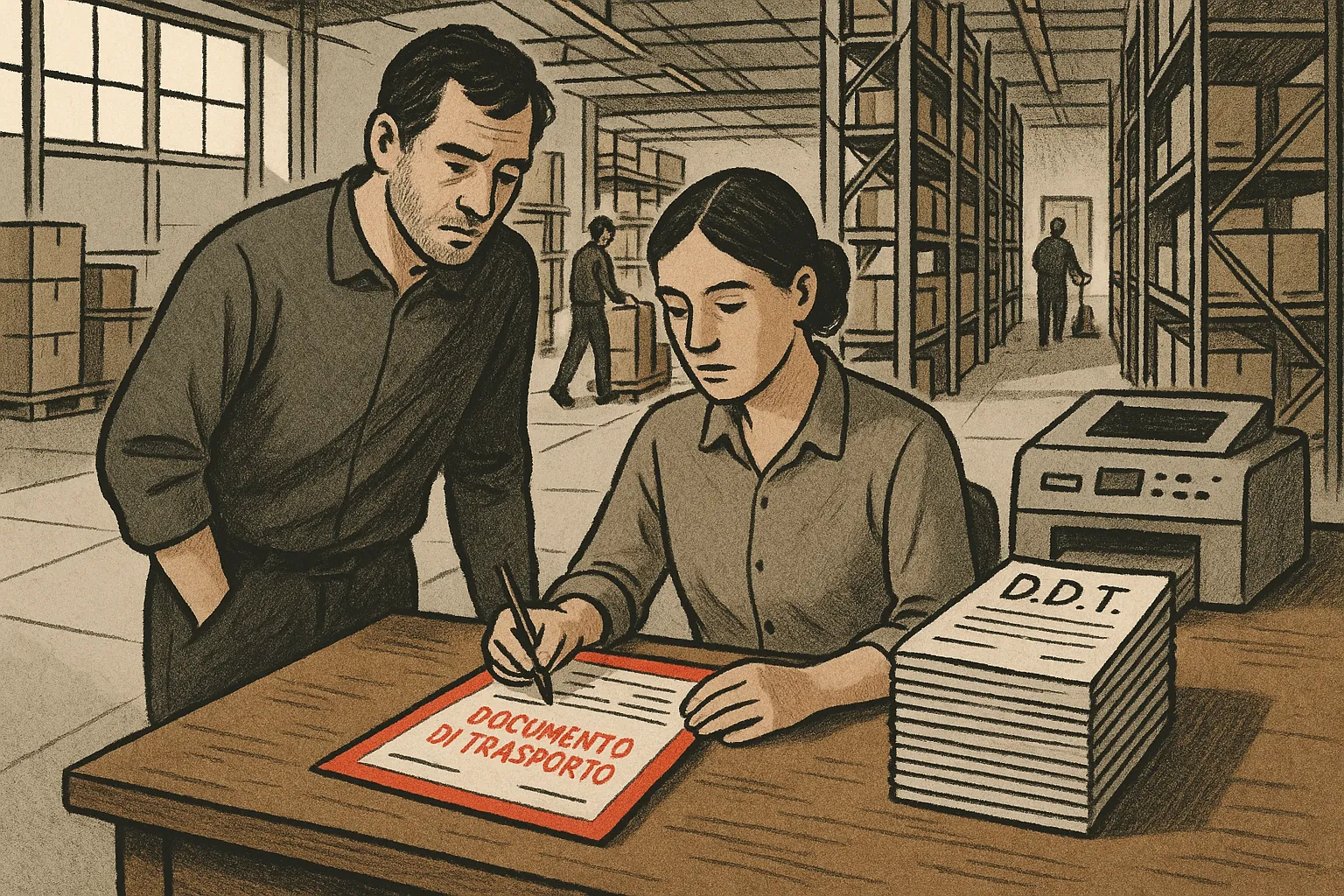
Combining AI agents with blockchain makes it possible to certify every step the data takes in logistics, guaranteeing authenticity and traceability, reducing disputes and increasing trust in automated processes.
A delivery note changed after shipping, a batch that changes status without a trace: these are errors that cost time and trust. In logistics, certainty about every piece of data is the real value.
Where data breaks: the case of transport documents
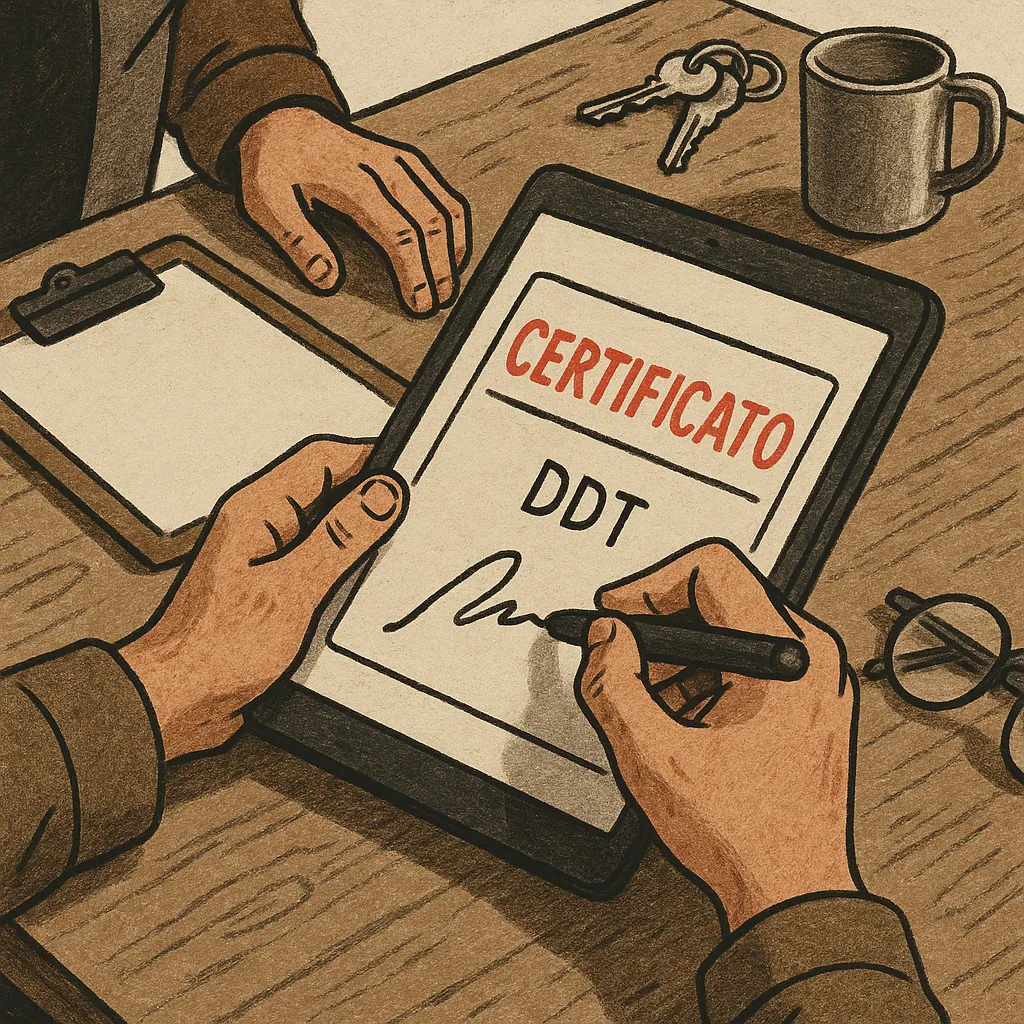
In logistics companies, the delivery note (DDT, the Italian transport document) changes often: additions, corrections, digital signatures. Every manual change opens the door to errors or disputes. If a customer receives goods with inconsistent data, responsibility is hard to reconstruct. A delivery note altered even by a simple oversight can block invoicing or trigger a commercial dispute. What is needed here is a reliable record of every step, not just the latest version.
How blockchain and AI certify every step
An AI agent with human oversight can record every change to logistics data on a blockchain: each time a delivery note is generated, signed or corrected, the event is written permanently. This makes it possible to trace who did what, when and why. If a piece of data is disputed, the full history can be reconstructed without doubt. The point is not to lock processes down, but to make them transparent and reliable, even when several people and different systems are involved.
Cutting the cost of disputes and checks
When there is no trust in the data, every anomaly becomes a case to analyse by hand: phone calls, emails, internal investigations. This work costs hours and slows the whole process. With automatic certification via blockchain, checks become immediate: you look at the record, see who did what and close the matter without argument. This frees up time and resources that today are wasted on after-the-fact checks.
A concrete example: tracing a batch in real time
A food logistics company handles dozens of batches a day. Every movement, every pallet opening, every quality check is recorded by AI agents with human oversight and certified on a blockchain. If a customer reports a problem with a batch, the company can show the complete sequence of operations, with times and people responsible. This shortens response times and increases the customer's trust, because no data can be altered after the fact.
What it is: AI agents with human oversight
Software systems that automate repetitive processes, where every critical decision is checked by a person. In logistics, they deliver efficiency without losing control of the data.
Frequently asked questions
Why is blockchain useful in logistics?
Because it makes every change to the data traceable and unalterable, reducing errors and disputes.
Do all company systems need to be replaced?
No. AI agents can integrate with existing systems, certifying only the critical data.
Who checks the data recorded on the blockchain?
Every piece of data is verified by AI agents with human oversight: no blind automation.
What happens if a piece of data is disputed?
You go back to the certified sequence of all the changes: who changed what, and when.
Drafts are produced by the Brainvision OS editorial pipeline and reviewed by a person before publication.
Keep reading
All articles
28 August 2026
AI agents in tourism: automating bookings and data
How AI agents with human oversight streamline bookings and data handling in tourism. Concrete examples for SMEs in Northern Italy.
12 September 2026
AI agent security: how to prevent breaches in your company
How to avoid unauthorised access and security breaches with AI agents in SMEs. Concrete measures for compliance and data protection.
1 September 2026
Google Gemini models: how to use them in industrial automation
How Google's Gemini models make it possible to build custom AI agents that improve efficiency and scalability in industrial automation.